3 Best Arm Guards for Archery Compared for Every Shooter (2026)
Compare the 3 best arm guard for archery options: cooling sleeves, adjustable bracers and slip-on guards. See specs, pros, cons and how to choose.
 By Lauren Holland
Updated November 23, 2026
 By Lauren Holland
Updated November 2026
An arm guard for archery protects the inside of your bow arm from string slap, the snap of the bowstring against your forearm after release. A good arm guard also keeps loose sleeves out of the string path, reduces noise, and gives you a consistent surface for a clean follow-through. The right choice depends on what you shoot, how warm it gets where you practice, and whether you want a fixed-fit guard or one you can tighten and adjust. The three picks below were chosen by comparing manufacturer specifications, brand reputation and common owner feedback about fit, coverage, and durability. None of them were tested by us; the notes reflect what listings and owners typically report.
Our Top Picks
Quick Comparison
| Product | Best for | Key feature |
|---|---|---|
| Archery Arm Guard Cooling Arm Sleeve (Black) | Outdoor shooters in warm weather | Full-coverage cooling sleeve with sun protection |
| Archery Arm Guard Bowstring Hit Prevention Forearm Protective Bracer | Archers who want an adjustable fit | Hook-and-loop closure with stretch material |
| Bohning Slip-on Archery Armguard (Camo) | Archers who prefer a traditional slip-on guard | Slip-on design with a camo finish |
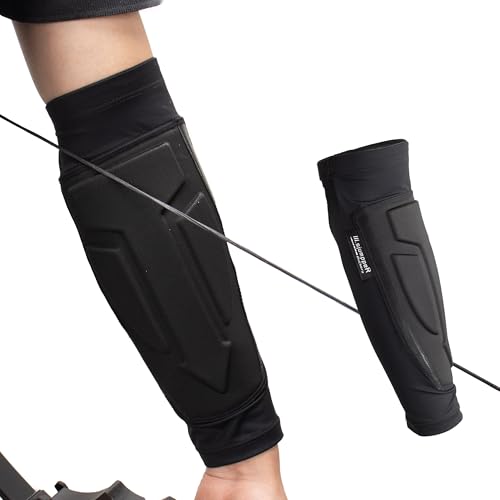
Archery Arm Guard Cooling Arm Sleeve Sun Protection with Full Coverage Forearm Design
Archery Arm Guard Cooling Arm Sleeve Sun Protection with Full Coverage Forearm Design for Right Left Hand Adult Archers (Black)
This model suits archers who shoot outdoors for long sessions and want forearm coverage that also works as a sleeve. It is listed for right or left hand use, which makes it a practical option for shooters who switch hands or share equipment.
Key specs
- Full-coverage forearm design
- Listed for right or left hand use
- Cooling sleeve with sun protection, as stated in the listing name
- Black colorway
Pros
- Covers more of the forearm than a narrow strap-style guard
- Sun protection suits long outdoor practice days
- Works for either bow arm
Cons
- A sleeve-style fit can feel warmer than a minimal guard for some archers
- Fit depends on sizing, so check the measurement chart before ordering
Archery Arm Guard Bowstring Hit Prevention Forearm Protective Bracer

Archery Arm Guard Bowstring Hit Prevention Forearm Protective Bracer | Adjustable Hook & Loop Fastener, Breathable & High Elastic Material, Bow Hunting Gear for Adult
This is a good fit for archers who want to adjust the tightness of their guard as they change jackets or shooting positions. The hook-and-loop closure makes it easy to size, and it is aimed at bow hunting as well as target use.
Key specs
- Adjustable hook-and-loop fastener
- Breathable, highly elastic material, as described in the listing
- Designed as a forearm protective bracer for adults
Pros
- Adjustable closure allows a snug fit over varying sleeve thicknesses
- Breathable material is a practical choice for warm-weather hunting
- Targets bowstring hit prevention directly
Cons
- Hook-and-loop closures can loosen over time with heavy use and need periodic checks
- Stretch material may not hold a precise position as firmly as a rigid guard
Bohning Slip-on Archery Armguard

Bohning Slip-on Archery Armguard, Medium, Camo
This guard suits archers who want a simple, quick-on design with no straps to fiddle with. It is a good match for traditional and recurve shooters who prefer a familiar slip-on feel and a camouflage finish for hunting settings.
Key specs
- Slip-on design
- Medium size, as stated in the listing name
- Camo pattern
Pros
- Fast to put on and take off between ends
- Camo finish suits field and hunting use
- Simple construction with few parts to wear out
Cons
- Slip-on fit is set by size rather than adjusted, so the sizing must be right
- Coverage is narrower than full-forearm sleeve designs
Buying Guide
Choosing an arm guard for archery comes down to a few practical questions: how much forearm coverage you need, whether you want a fixed or adjustable fit, how warm your shooting conditions are, and what style of bow you shoot. New archers often underestimate string slap, so it is worth picking a guard that covers the area where the string travels on release, not just the wrist.
Selection criteria
- Coverage: A wider guard protects more of the forearm. A narrow strap works for light shooters with a quiet release.
- Fit: Hook-and-loop closures adapt to different sleeve thicknesses. Slip-on guards depend on correct sizing.
- Material: Breathable, stretch fabrics suit warm weather. Firmer materials hold their shape better.
- Hand use: Some guards are listed for right or left hand use. Check before buying if you shoot either hand.
Important features
Look for a guard that stays in place during the draw and release without riding up or pinching. The guard should sit flat, not bunch up, and should not restrict your elbow or shoulder. If you wear a jacket or thicker top while shooting, measure your forearm over the clothing you will actually use.
Specs to check
- Size chart based on forearm circumference, measured where you wear the guard
- Closure type and how many adjustment points it offers
- Material composition and whether the listing mentions breathability or stretch
- Whether the guard is listed for right, left or either hand
Choosing by need
For outdoor summer practice, a breathable or cooling sleeve with good coverage is usually the more comfortable choice. For shooters who change layers often, an adjustable hook-and-loop bracer makes it easier to re-fit quickly. For traditional or field archers who value speed, a slip-on guard keeps setup simple. If you are new to the sport, start with a guard that covers the full inside of the forearm, then adjust your choice once you know how your string travels.
Things to watch out for
- Guards that are too loose can shift during the shot and leave the forearm exposed
- Guards that are too tight can restrict blood flow or cause discomfort on long sessions
- Hook-and-loop closures collect debris and should be cleaned periodically
- Check that the guard does not interfere with your string path or hand position
If you have a medical condition affecting circulation or skin sensitivity, consult a doctor or a qualified archery coach before choosing a snug guard.
For more on the gear that works alongside your guard, see Parts of Archery Arrows: A Beginner's Guide to Every Component and Types of Arrows in Archery: A Beginner's Guide to Shafts and Spines.
FAQ
What does an arm guard for archery actually do?
It protects the inside of your bow arm from string slap, the contact that happens when the bowstring snaps forward after release. It also keeps loose sleeves out of the string path and can reduce noise.
How do I know what size arm guard to buy?
Measure your forearm circumference at the point where the guard will sit, usually a few inches below the elbow. Compare that number to the manufacturer’s size chart. If you wear a jacket while shooting, measure over that layer.
Should I wear an arm guard over or under my sleeve?
Most archers wear the guard over a fitted shirt or base layer so it stays in place. Loose sleeves should be kept out of the string path entirely, and a guard can help hold a sleeve back.
Can I use an arm guard for bow hunting?
Yes. Many hunters use an arm guard for string protection and quiet shooting. Camouflage or darker colors are common choices for field use. Check the listing for any hunting-specific notes.
How often should I replace my arm guard?
Replace it when the closure no longer holds, the material has stretched out of shape, or the surface shows wear that could let the string contact skin. Inspect it before each session.
Is an arm guard needed for recurve and compound bows?
Both bow types benefit from forearm protection, though the amount of string travel varies. Recurve and traditional shooters often use a guard to protect against slap, while compound shooters may use one for coverage and comfort.
Can an arm guard cause problems if it fits too tightly?
A guard that is too snug can cause discomfort, mark the skin, or restrict circulation during long sessions. If you notice numbness or tingling, remove the guard and speak with a healthcare professional.
Conclusion
All three picks serve the same purpose, but they suit different shooters. The full-coverage cooling sleeve fits outdoor archers who want sun protection and coverage for either hand. The adjustable hook-and-loop bracer suits shooters who change layers or want a customizable fit for bow hunting. The slip-on Bohning guard fits archers who want a quick, simple, camo-finished option for field and traditional shooting. Measure your forearm, match the closure to how you shoot, and check the size chart before you buy.
Related reading
- Women's Archery Arm Guard: How to Choose and Fit One Properly
- Traditional Archery Arm Guard: 3 Best Picks for Target Archers (2026)
- Making an Archery Arm Guard: A Step-by-Step Guide for Beginners
- Long Archery Arm Guard: How to Choose, Fit and Use One Properly
- Leather Archery Arm Guard UK: How to Choose, Fit and Care for One
About Lauren Holland
Lauren Holland is part of our editorial team and reviews and edits our target archery guides, checking product details against manufacturer specifications and owner feedback.
About the author
Lauren Holland writes reviews and buying guides for Archery Society.